
Psychosocial Rehabilitation: Restoring Function Beyond Medicine
Recovery is not only about treating the body — it is about restoring the whole person. Patients with mental illness, disability, or chronic health conditions often face barriers beyond medical symptoms: loss of independence, social isolation, unemployment, or reduced quality of life.
This is where psychosocial rehabilitation (PSR) comes in. It is a holistic, patient-centered approach that focuses on empowering individuals to regain skills, build resilience, and participate fully in their communities.
In this guide, we’ll explore what psychosocial rehabilitation is, why it matters, and how it transforms patient outcomes.
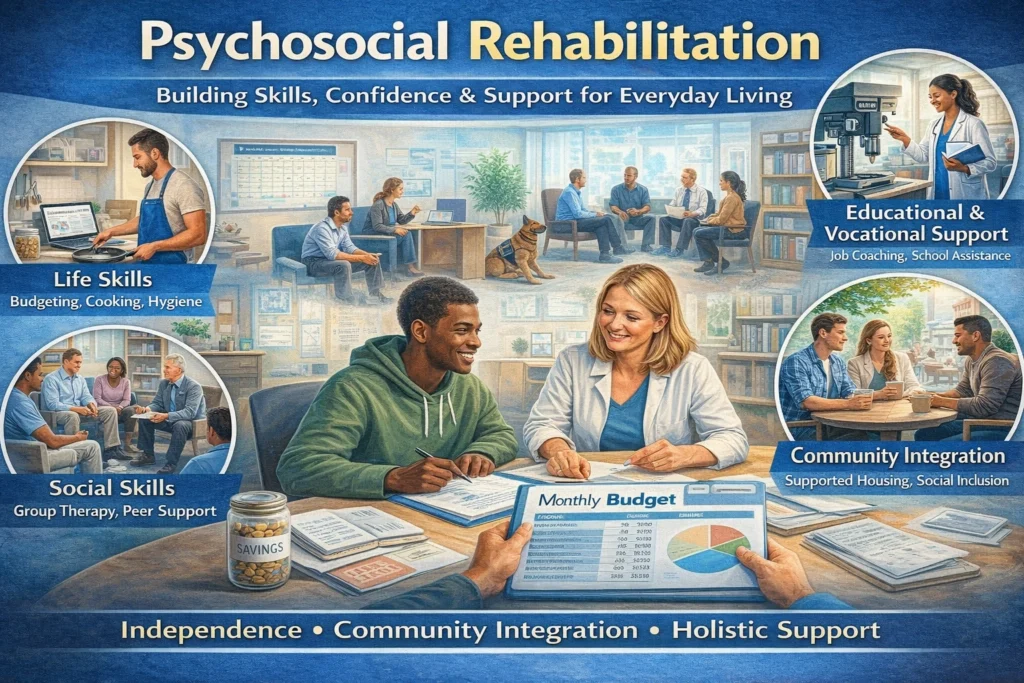
What Is Psychosocial Rehabilitation?
Psychosocial rehabilitation (often shortened to PSR) refers to therapeutic and community-based programs designed to help people with mental illness, developmental conditions, or disabilities live independently and improve their quality of life.
Unlike purely medical interventions, PSR emphasizes:
- Life skills training (e.g., managing finances, cooking, using public transportation).
- Vocational support (job training, supported employment).
- Social skills development (building relationships, communication skills).
- Cognitive and behavioral therapies (to manage symptoms and coping).
- Community integration (housing, peer support, recreation).
In short, PSR bridges the gap between medical treatment and everyday functioning.
Related article: How Collaboration Shapes the Future of Physical Medicine
Why Is Psychosocial Rehabilitation Important?
Patients with psychiatric or chronic conditions may struggle even after receiving medical treatment. For example:
- A person with schizophrenia may have stabilized on medication but still lacks work skills.
- An individual recovering from brain injury may need help re-entering social life.
- A person with depression may feel isolated and disconnected.
PSR programs address these non-medical barriers by focusing on independence, dignity, and active participation in society.
Benefits include:
- Greater self-sufficiency and independence.
- Improved social functioning and relationships.
- Higher rates of employment and education.
- Reduced hospital readmissions.
- Enhanced overall quality of life.
Grow your clinic: Best Chiropractic Facebook Ads Agencies in 2026
Who Provides Psychosocial Rehabilitation?
PSR is delivered by a multidisciplinary team, often including:
- Psychiatrists & psychologists – oversee treatment plans and therapy.
- Rehabilitation counselors – provide vocational and life skills training.
- Social workers – connect patients with housing, financial, and community resources.
- Occupational therapists (OTs) – teach adaptive skills for daily living.
- Peer support specialists – people with lived experience who guide others.
This collaborative approach ensures patients receive comprehensive support.
Related article: What Is Acute Rehabilitation?
Key Components of Psychosocial Rehabilitation
1. Assessment and Individualized Planning
Every program begins with a personalized evaluation to identify a patient’s strengths, needs, and goals.
2. Skill Development
Training in practical skills such as:
- Self-care (nutrition, hygiene).
- Budgeting and money management.
- Workplace communication.
- Problem-solving and conflict resolution.
3. Vocational Rehabilitation
- Resume building and job interview preparation.
- Supported employment programs.
- Partnerships with local businesses to create opportunities.
4. Social and Community Support
- Group therapy and peer-led sessions.
- Recreational and cultural activities.
- Housing assistance and supported living arrangements.
5. Therapeutic Interventions
- Cognitive-behavioral therapy (CBT).
- Family education and counseling.
- Relapse prevention and crisis management.
Related article: The Role of International Congresses in Advancing Rehabilitation Medicine
Psychosocial Rehabilitation in Different Settings
- Community Mental Health Centers – provide outpatient services and peer support.
- Hospitals & Clinics – integrate PSR with medical treatment.
- Residential Programs – for patients needing structured living environments.
- Vocational Centers – focus on employment and education.
Each setting adapts PSR to meet the unique needs of its population.
Real-World Impact of Psychosocial Rehabilitation
Research consistently shows that PSR improves long-term outcomes. Patients who participate often:
- Stay employed longer.
- Have fewer relapses and hospitalizations.
- Report higher satisfaction in relationships.
- Experience reduced stigma and discrimination.
This holistic care model proves that health is more than medicine — it’s about restoring purpose, confidence, and belonging.
Read more: What Is the Goal of Rehabilitation?
Challenges in Psychosocial Rehabilitation
While effective, PSR faces barriers such as:
- Limited funding for community-based programs.
- Shortage of trained professionals in some regions.
- Stigma preventing patients from seeking help.
- Variability in program quality depending on resources.
Expanding awareness, investment, and training will help overcome these challenges.
The Future of Psychosocial Rehabilitation
Emerging trends are making PSR more accessible and impactful:
- Digital tools & apps for therapy and social skills training.
- Telehealth PSR programs connecting patients remotely.
- Integration with primary care for holistic patient management.
- Peer-led initiatives that empower patients to lead recovery communities.
The combination of technology, advocacy, and collaboration will shape the next generation of rehabilitation services.
FAQs About Psychosocial Rehabilitation
1. Who benefits most from psychosocial rehabilitation?
Individuals with mental illness, brain injury, developmental conditions, or chronic disabilities.
2. How is PSR different from medical treatment?
Medical treatment focuses on symptoms; PSR focuses on skills, independence, and community reintegration.
3. Is psychosocial rehabilitation permanent?
Not necessarily. Some patients require ongoing support, while others transition to full independence.
4. Does insurance cover PSR?
Coverage varies. Some services may be covered under mental health benefits or rehabilitation plans.
5. Can family members be involved?
Yes — family education and involvement are often key to success.
Conclusion
Psychosocial rehabilitation is a vital bridge between clinical treatment and real-world living. By focusing on skills, independence, and social integration, PSR empowers individuals to lead fulfilling lives beyond medical recovery.
At AMPRMADA, we are dedicated to preserving and sharing resources in rehabilitation medicine, ensuring professionals and patients alike understand the importance of holistic approaches like PSR in improving patient care.