
What Is Acute Rehabilitation?
Acute rehabilitation is a short-term, intensive therapy program designed to help patients regain physical and functional abilities after a serious illness, injury, or surgery. These programs typically take place in hospital-based rehabilitation units or specialized inpatient rehab facilities, where patients receive coordinated medical care and multiple therapy sessions each day.
The goal of acute rehabilitation is simple but powerful: restore independence as quickly and safely as possible. By combining medical oversight with intensive therapy, acute rehab helps patients recover mobility, strength, cognitive function, and daily living skills during the critical early stages of recovery.
Acute rehabilitation is a core component of Physical Medicine and Rehabilitation (PM&R), a medical specialty focused on restoring functional ability after injury or disease.
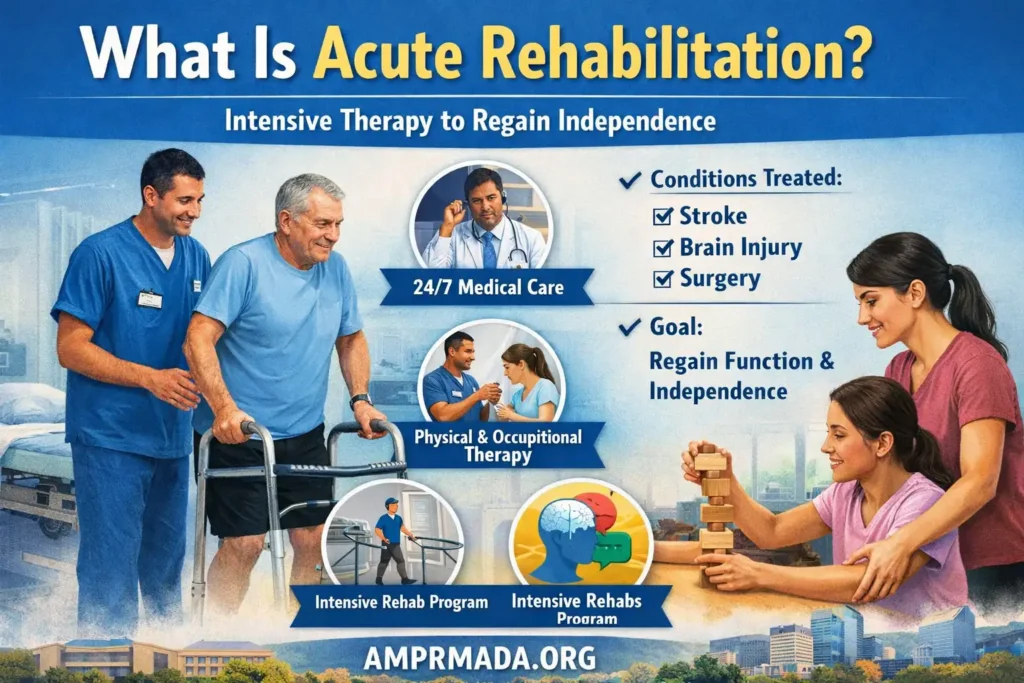
Defining Acute Rehabilitation
Acute rehabilitation refers to high-intensity inpatient rehabilitation care provided to patients who are medically stable but still require structured therapy and medical supervision.
A defining characteristic of acute rehab is the combination of intensive therapy and physician-directed care.
Semantic relationship examples within this field include:
- Acute rehabilitation → improves → functional independence
- Physiatrists → oversee → rehabilitation treatment plans
- Physical therapy → restores → strength and mobility
- Occupational therapy → improves → daily living skills
- Speech therapy → addresses → communication and swallowing disorders
Patients admitted to acute rehab typically participate in around three hours of therapy per day, five to seven days per week.
Conditions Commonly Treated in Acute Rehabilitation
Acute rehabilitation programs treat patients recovering from a wide range of serious medical conditions.
Common diagnoses include:
| Condition | Rehabilitation Focus |
|---|---|
| Stroke | Mobility recovery, speech therapy, cognitive rehabilitation |
| Traumatic brain injury (TBI) | Cognitive therapy, balance training, memory rehabilitation |
| Spinal cord injury | Mobility training, adaptive equipment, independence skills |
| Joint replacement surgery | Strength recovery, walking training, pain management |
| Severe trauma or illness | Functional recovery, endurance rebuilding |
These conditions often cause temporary or permanent functional impairment, making structured rehabilitation essential for recovery.
Key Features of Acute Rehabilitation Programs
Acute rehab programs differ from other forms of rehabilitation because of their intensity, coordination, and medical supervision.
Multidisciplinary Care Teams
Acute rehabilitation involves a team-based medical approach where specialists collaborate to support patient recovery.
Typical care teams include:
- Physiatrists (rehabilitation physicians)
- Physical therapists
- Occupational therapists
- Speech-language pathologists
- Rehabilitation nurses
- Case managers and social workers
Semantic triple examples:
- Rehabilitation teams → coordinate → patient care
- Physiatrists → manage → rehabilitation programs
- Rehabilitation nurses → monitor → patient progress
Intensive Daily Therapy
Patients in acute rehabilitation participate in structured therapy sessions throughout the day. These therapies may include:
- Physical therapy for mobility and strength
- Occupational therapy for self-care and daily activities
- Speech therapy for communication and swallowing
The high frequency of therapy supports neuroplasticity and functional recovery, especially after neurological injury.
Continuous Medical Oversight
Unlike outpatient therapy programs, acute rehab provides 24-hour medical monitoring.
This ensures that patients recovering from complex conditions such as stroke, spinal cord injury, or major surgery receive safe and coordinated care.
Acute Rehabilitation vs Subacute Rehabilitation
Many patients and families confuse acute rehabilitation with subacute rehabilitation. While both provide therapy services, they differ significantly in intensity and medical support.
| Feature | Acute Rehabilitation | Subacute Rehabilitation |
|---|---|---|
| Therapy intensity | About 3 hours daily | 1–2 hours daily |
| Setting | Hospital rehab unit | Skilled nursing facility |
| Medical oversight | Frequent physician supervision | Limited physician visits |
| Length of stay | Often 2–4 weeks | Several weeks or months |
| Patient profile | Able to tolerate intensive therapy | Requires slower recovery pace |
Semantic relationships:
- Acute rehabilitation → provides → intensive therapy
- Subacute rehabilitation → provides → gradual recovery care
Benefits of Acute Rehabilitation
Acute rehabilitation programs offer several important advantages for patients recovering from serious medical conditions.
Faster Functional Recovery
Intensive therapy accelerates improvements in:
- Walking ability
- Balance and coordination
- Self-care activities such as bathing and dressing
- Communication and cognitive function
Reduced Risk of Complications
Early rehabilitation helps prevent complications such as:
- Muscle atrophy
- Reduced mobility
- Hospital readmission
Semantic triple examples:
- Early rehabilitation → reduces → long-term disability
- Structured therapy → improves → recovery outcomes
Improved Independence
The primary goal of acute rehab is to help patients regain the ability to perform activities of daily living (ADLs), including:
- Dressing
- Bathing
- Walking
- Preparing meals
- Managing personal care
Who Provides Acute Rehabilitation?
Acute rehabilitation is delivered by specialized medical professionals trained in recovery and functional restoration.
Physiatrists
Physiatrists are physicians specializing in Physical Medicine and Rehabilitation who oversee treatment plans and coordinate care.
Physical Therapists
Physical therapists focus on restoring:
- Mobility
- Balance
- Strength
- Walking ability
Occupational Therapists
Occupational therapists train patients to regain independence in daily tasks such as dressing, bathing, and household activities.
Speech-Language Pathologists
Speech therapists treat communication difficulties and swallowing disorders that may occur after stroke or neurological injury.
Semantic relationships in care delivery include:
- Speech therapy → treats → swallowing disorders
- Occupational therapy → restores → daily living skills
- Physical therapy → improves → patient mobility
The Role of Acute Rehabilitation in Patient Recovery
Acute rehabilitation serves as a bridge between hospital treatment and independent living.
Following serious medical events, many patients are not ready to return home immediately. Acute rehab provides the structured therapy and medical support needed to rebuild strength, mobility, and confidence before discharge.
By emphasizing early and intensive rehabilitation, these programs help maximize the body’s ability to recover during the most important phase of healing.
Conclusion
Acute rehabilitation is a critical part of modern medical recovery. Through intensive therapy, coordinated care teams, and continuous medical supervision, acute rehab programs help patients recover from stroke, surgery, trauma, and serious illness.
For many individuals, acute rehabilitation provides the support and expertise needed to regain independence, restore physical function, and return to everyday life.