
In today’s healthcare landscape, collaboration is no longer optional—it is essential. Physical medicine and rehabilitation (PM&R) thrive on multidisciplinary approaches, where physicians, therapists, nurses, researchers, and policymakers work together toward the same goal: restoring function and improving patient outcomes.
This article explores how collaboration is shaping the future of physical medicine, why it matters for both patients and professionals, and what trends are redefining teamwork in rehabilitation.
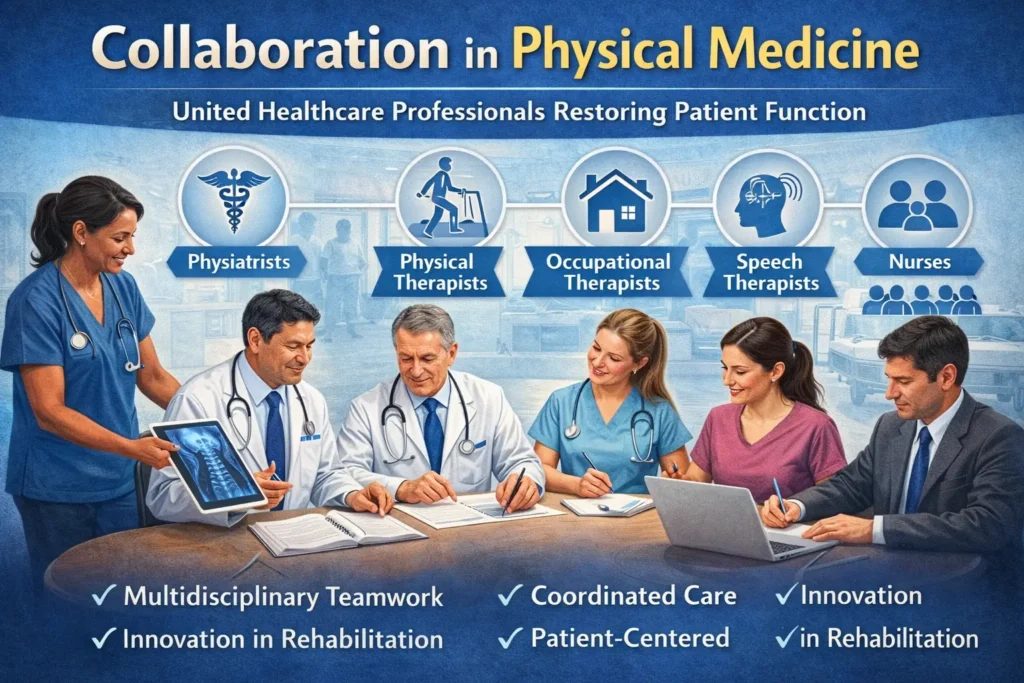
Why Collaboration Is Vital in Physical Medicine
Rehabilitation medicine deals with complex conditions that affect mobility, independence, and quality of life. No single professional can manage every aspect of recovery. Collaboration ensures:
- Comprehensive Care: Physicians manage diagnosis and medical treatment, while therapists provide direct rehabilitation strategies.
- Improved Outcomes: Studies show multidisciplinary teams shorten recovery time and increase functional independence.
- Continuity of Care: Collaboration ensures smooth transitions from hospital to outpatient rehab to home care.
- Innovation: Shared knowledge across disciplines accelerates adoption of new therapies and technologies.
Who Collaborates in Rehabilitation Teams?
Collaboration brings together diverse professionals, each with a unique role:
- Physiatrists (PM&R doctors) – Oversee rehabilitation programs, diagnose conditions, prescribe treatments.
- Physical Therapists (PTs) – Focus on movement, strength, and functional training.
- Occupational Therapists (OTs) – Help patients regain independence in daily living activities.
- Speech-Language Pathologists – Support patients with communication or swallowing difficulties.
- Rehabilitation Nurses – Provide day-to-day care and coordinate patient education.
- Social Workers & Psychologists – Address emotional, social, and financial aspects of recovery.
This team-based model of care is what makes rehabilitation medicine so effective.
Real-World Examples of Collaboration in Physical Medicine
- Stroke Rehabilitation
- Neurologists, PM&R doctors, PTs, and OTs coordinate intensive therapy programs.
- Collaboration reduces disability and enhances long-term independence.
- Spinal Cord Injury Care
- Requires coordinated input from physiatrists, neurosurgeons, therapists, and prosthetics specialists.
- Improves mobility outcomes and adaptive technology use.
- hronic Pain Management
- Combines medical management, psychological therapy, and physical rehabilitation.
- Patients benefit from a holistic approach rather than isolated treatments.
How Collaboration Drives Innovation
Collaboration is not just about teamwork—it’s about building the future:
- Research Partnerships: Universities and clinics share findings that accelerate treatment development.
- Technology Integration: Collaboration with engineers has brought robotics, virtual reality, and tele-rehabilitation into mainstream practice.
- Policy Influence: Associations and congresses advocate for rehabilitation access, shaping healthcare laws and systems.
Challenges in Collaborative Rehabilitation
While collaboration is powerful, it comes with challenges:
- Communication Barriers between professionals.
- Resource Limitations in low-income regions.
- Hierarchy Issues, where some voices dominate decision-making.
Addressing these challenges requires training in team-based care, investment in healthcare infrastructure, and commitment to shared goals.
The Future of Collaborative Physical Medicine
Looking ahead, collaboration will only deepen:
- Telehealth Integration: Remote platforms allow teams to consult across borders.
- Global Knowledge Exchange: International congresses and associations foster worldwide collaboration.
- Patient-Centered Models: Patients and families increasingly become active members of the rehabilitation team.
Conclusion
Collaboration is the cornerstone of progress in physical medicine. By uniting diverse expertise, rehabilitation medicine delivers better outcomes, drives innovation, and builds systems that serve patients more effectively.
The future of physical medicine will be written not by individuals working in isolation, but by teams committed to advancing recovery together.